The Pantanal - November 9, 2025
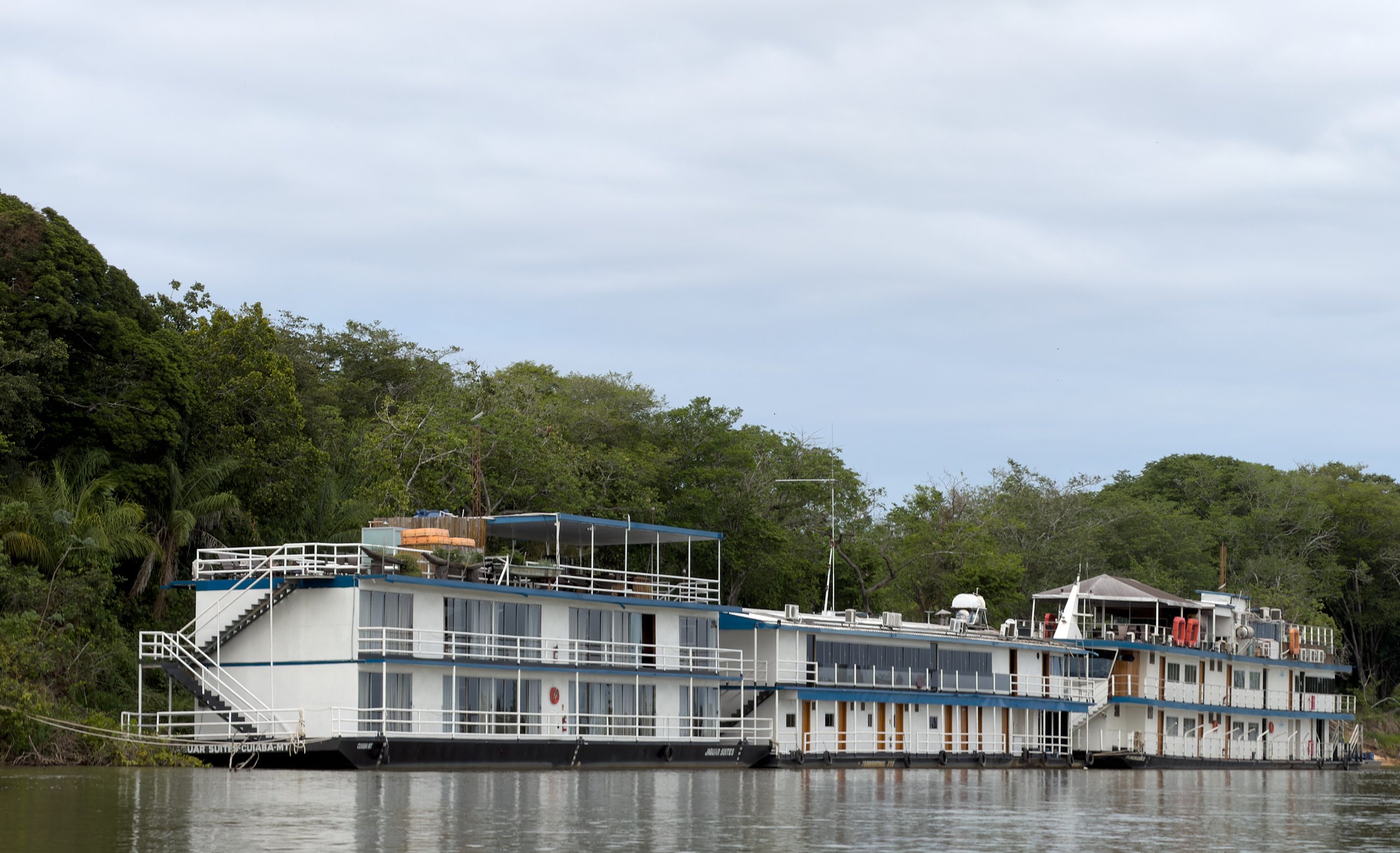
Our floating hotel, in the heart of jaguar country.
Today is a day for jaguars.
We have been in the Pantanal since Monday and the last 5 days have not left much time for reviewing images nor for posting. Our days have started with an alarm set for 4:00, with a quick breakfast at 4:45 and off in the boat at 5:15 sunrise.
There are 5 of us in a 5 metre long boat, self and Rob, our two guides and the boat driver. We stop in for a quick lunch at our floating hotel at 11:30 and are off again at 12:00 and stay out until sunset at around 18:00, so 12+ hours in the boat. Temperatures coolish in the morning and the late afternoon but 35-37C from about 7:00 until about 18:00.
Dinner at 19:00 and in bed by 21:00, not much time for image review.
And time is definitely needed. I mentioned last year, when we were in Patagonia, that my hands have been developing an age-related shake which makes fine motor control increasingly more difficult when trying to keep the camera steady. The Pantanal shooting environment has raised the camera-steadiness stakes considerably.
I’m using a 150-600mm super telephoto which is more than 33cm long and camera and lens weigh 2.5kg, so keeping it steady in ideal conditions is a challenge but in a small boat in a river with a swift current and many waves it becomes a herculean task. My solution is to ‘spray and pray’, That is try and grab focus on the subject and set the shutter to ‘burst-mode’. Normally when you press the shutter the camera takes one image, in burst-mode it takes 7 images a second. Before sitting down to review my images I had no idea how well my shots would work, there were lots of great shooting opportunities but I did not know how well I had managed to capture what I was trying to capture. And at 7 frames a second I had over 9000 images to review,.
Over the course of 5 days we have had 21 encounters with jaguars and with 8 different individuals, an embarrassment of riches! Yesterday, our first free-ish day, I spent about 5 hours scrolling through images looking for keepers. The ratio of good ones to discards or duplicates is very small but hardly surprising. If I can make 5-10 good shots over the course of a trip I’m more than pleased. The first batch follows below; by no means great shots but they a give a good sense of the animals and their habitat.
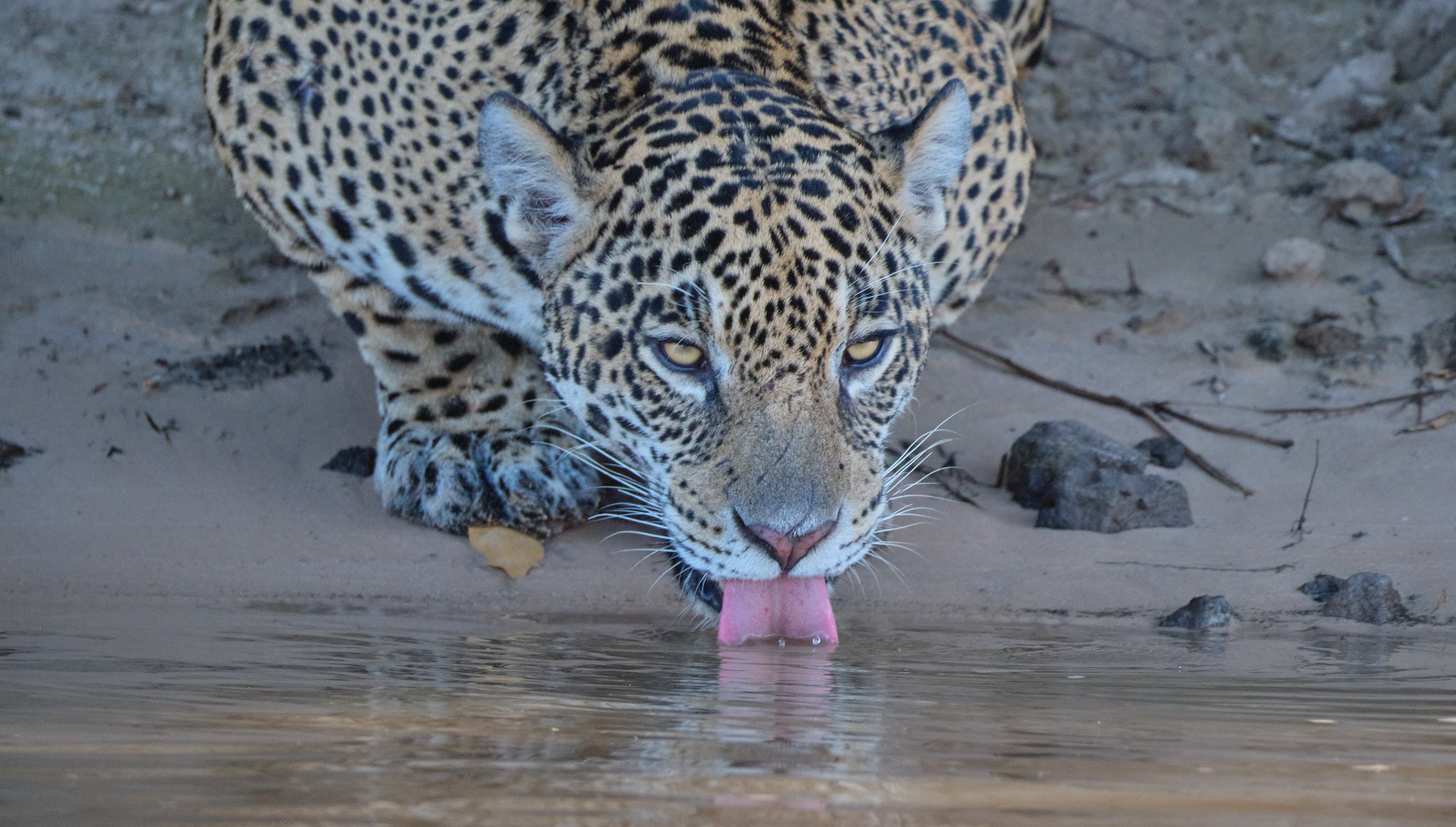
Young female jaguar
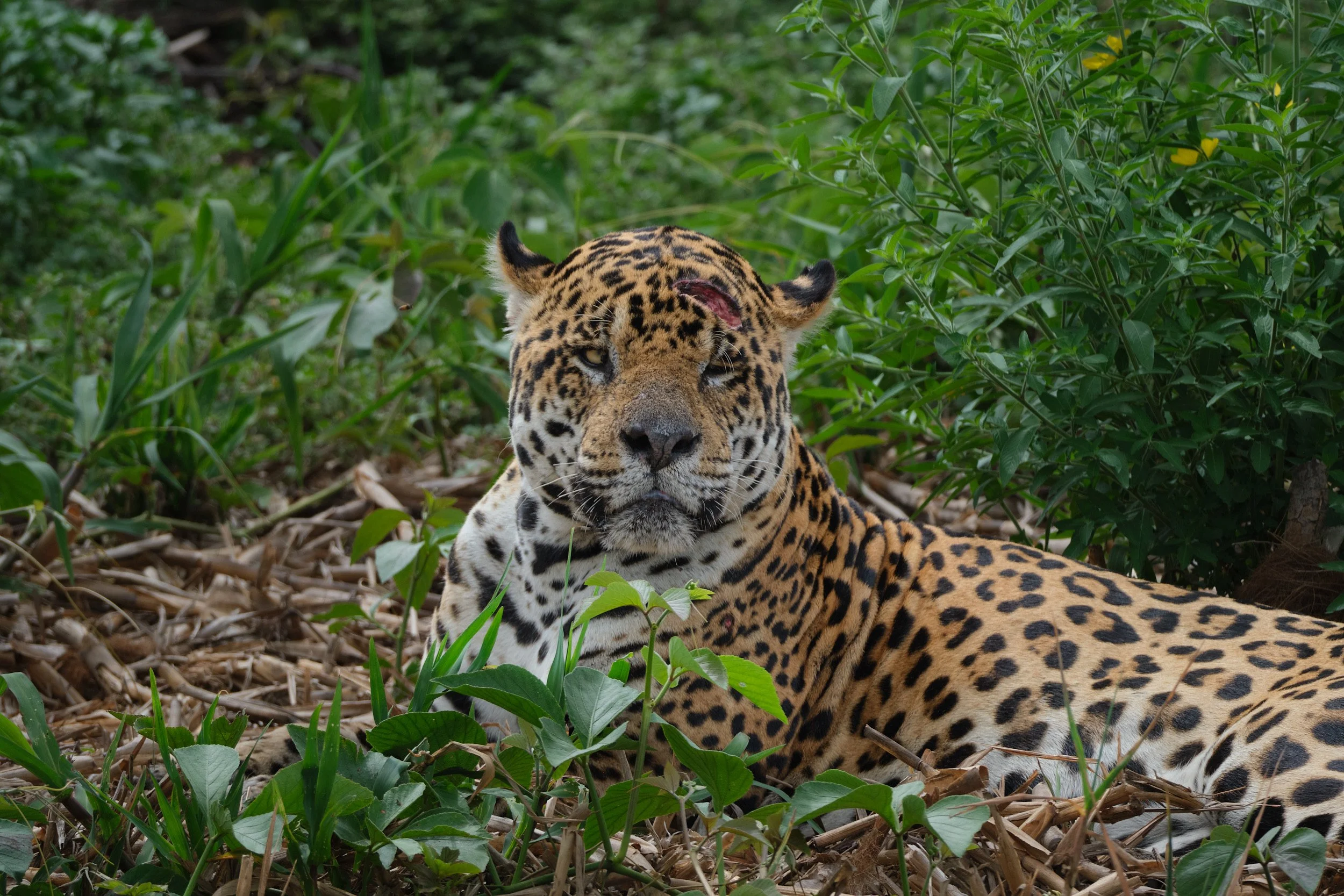
Older male displaying the effects of a territorial dispute.
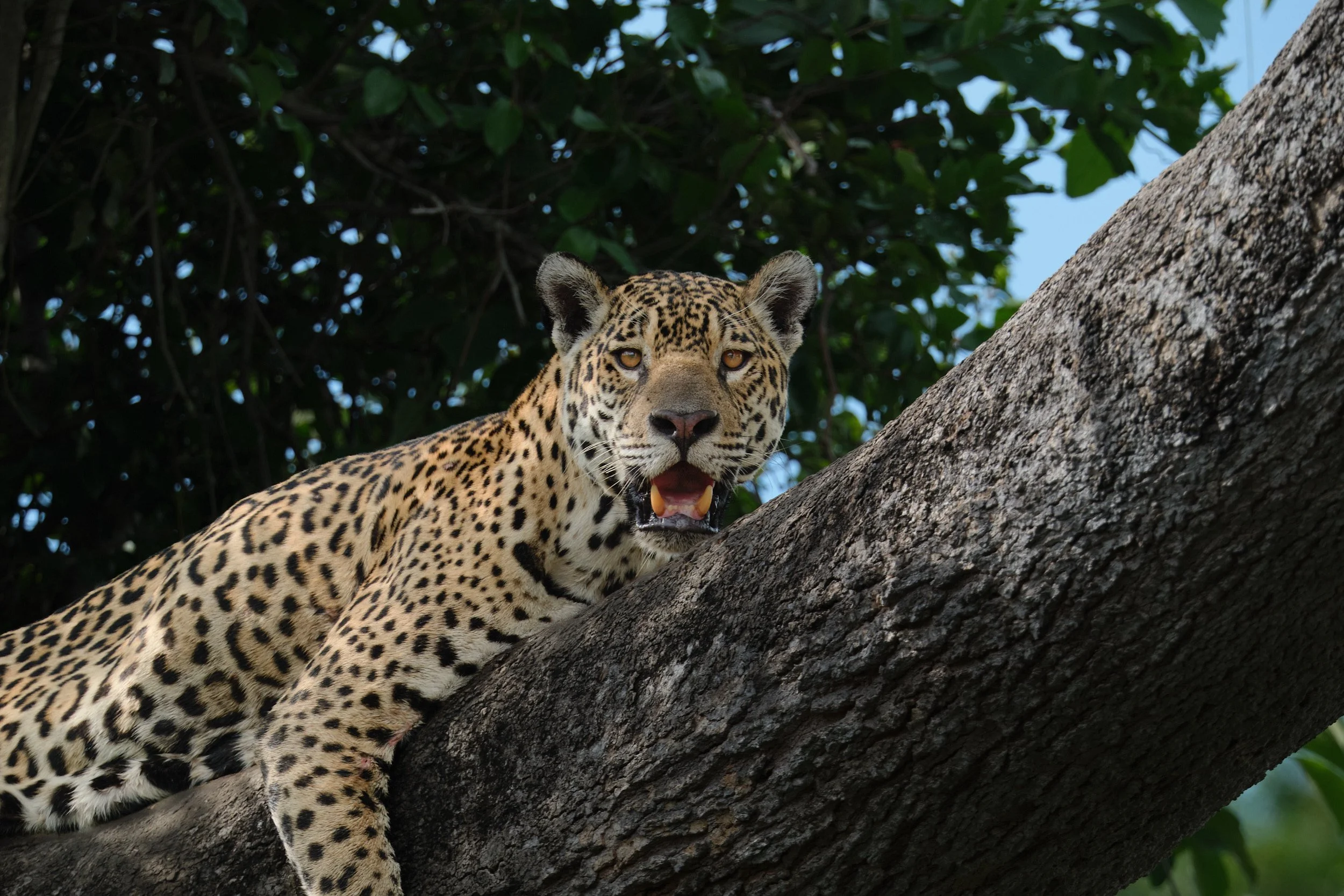
Another young female, in hopes of taking a cayman in the water below the branch.
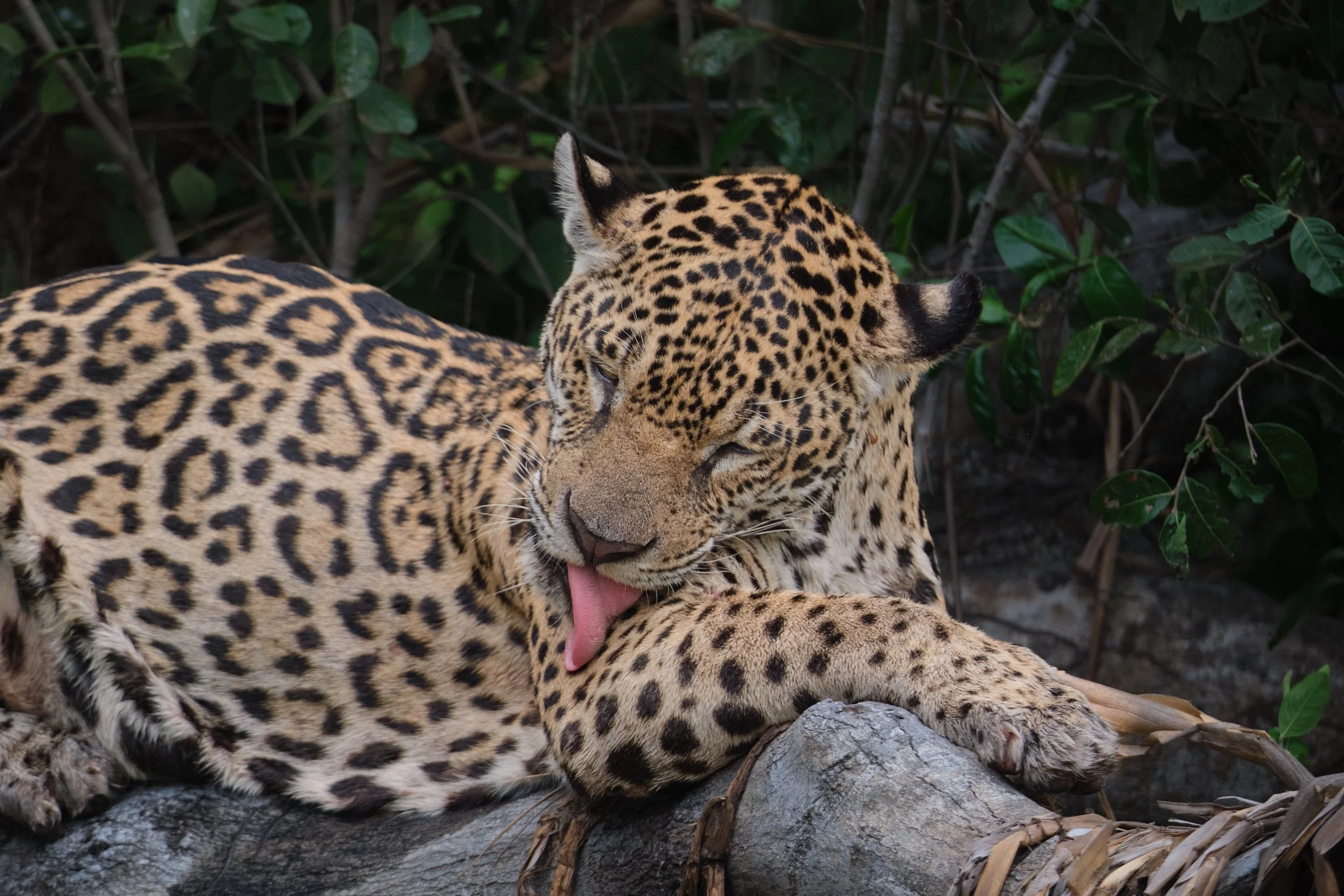
A reminder that, at their core, they are all just cats
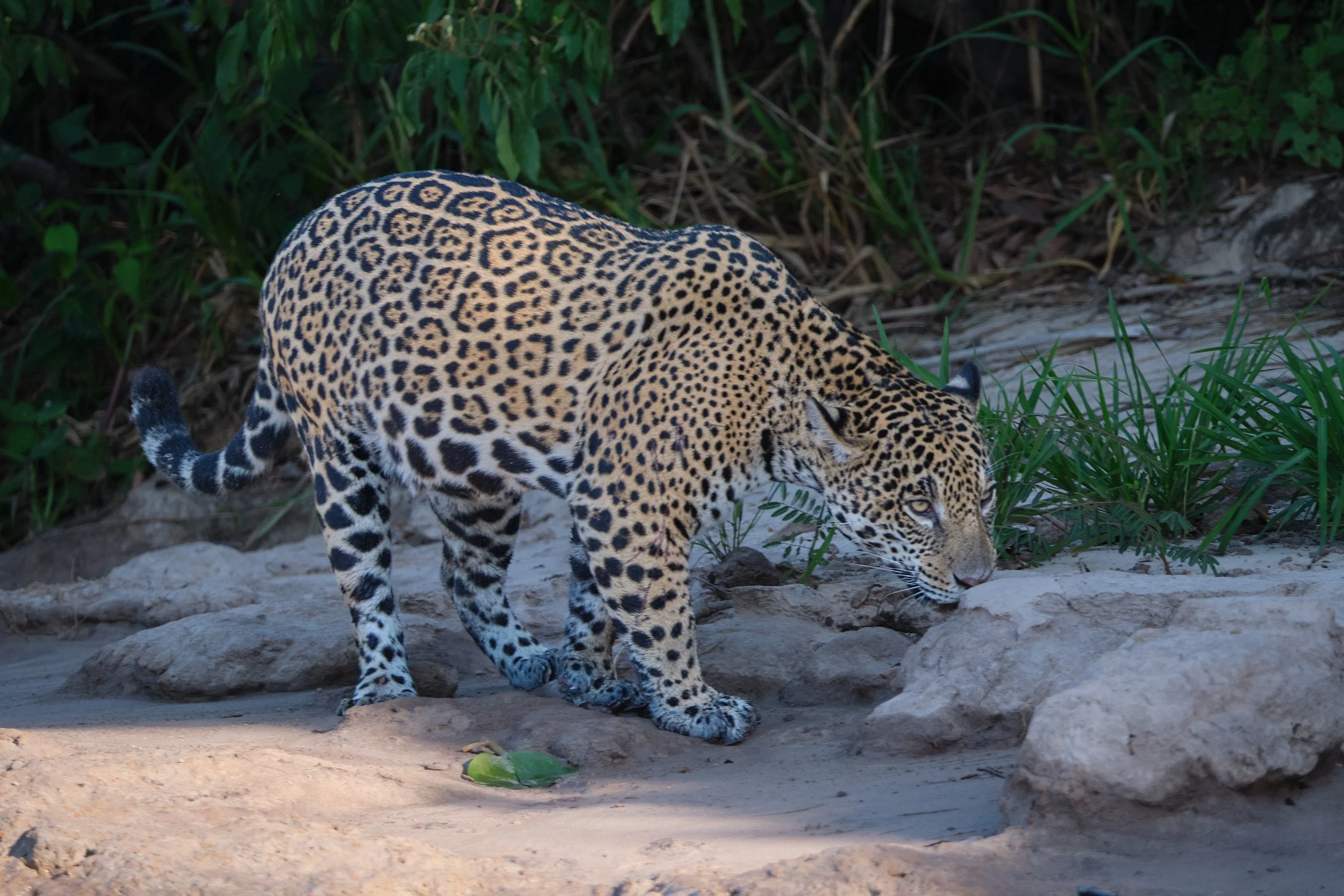
This young female is in the first stage of smelling the area for indicators of another cat who may have marked the territory
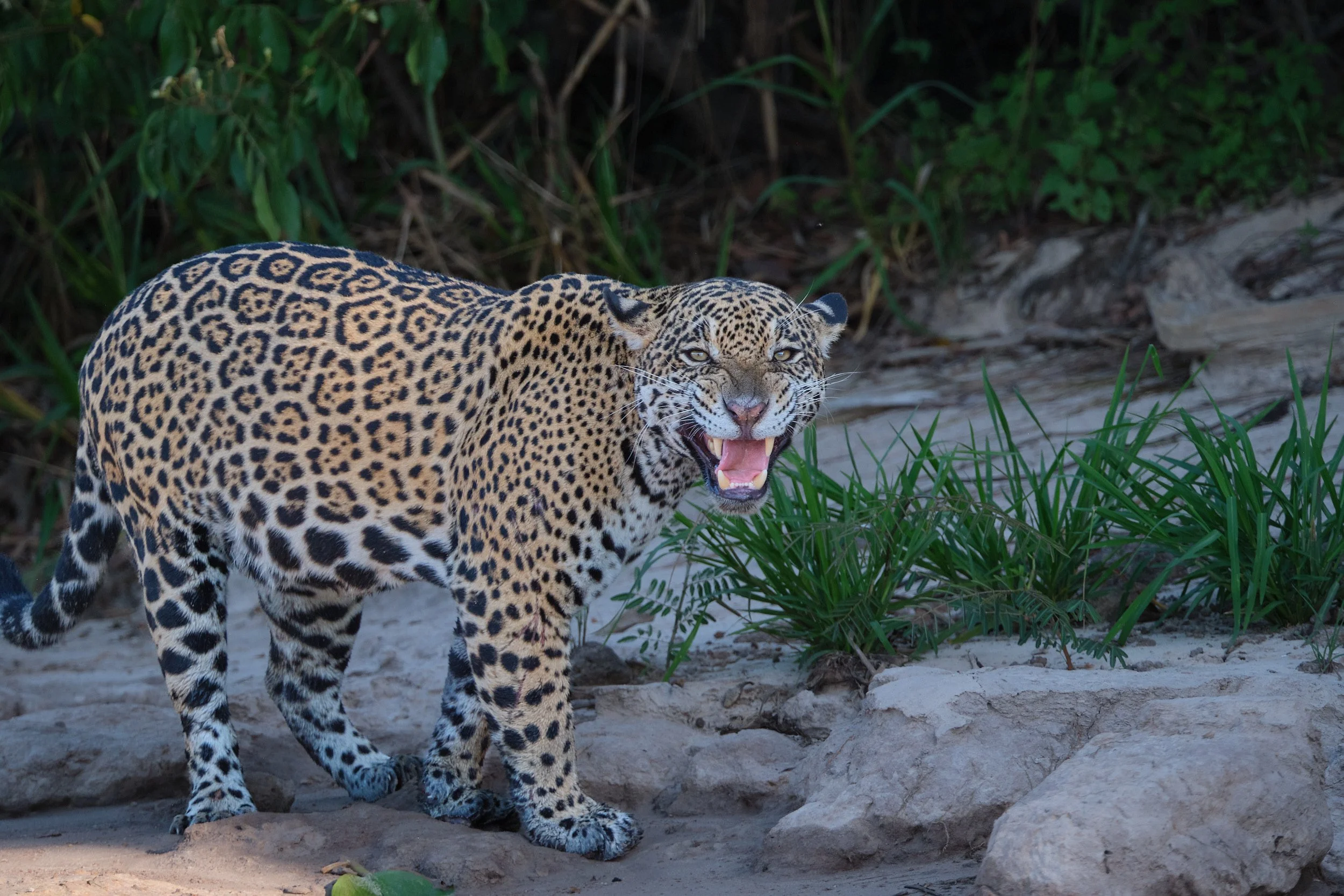
She is now exhibiting the Flehman Response. This is a behaviour in which an animal curls back its upper lip exposing its front teeth, inhales with the nostrils usually closed, and then often holds this position for several seconds. It is usually performed over a site or substance of particular interest to the animal.
Flehmen is performed by a wide range of mammals, including ungulates and felines. The behaviour facilitates the transfer of pheromones and other scents into the vomeronasal organ (or Jacobson's organ) located above the roof of the mouth via a duct which exits just behind the front teeth of the animal.
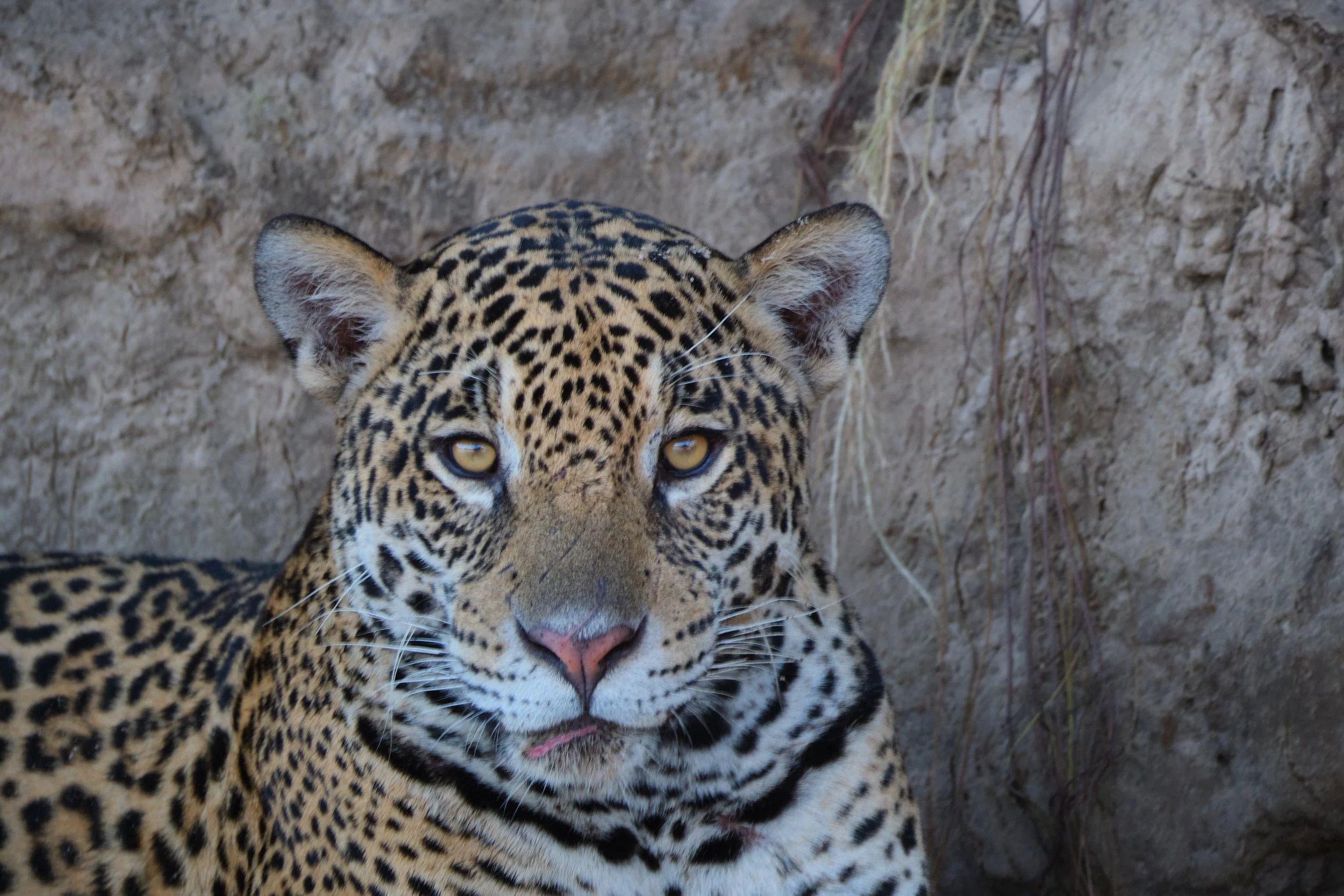
Another beautiful female, sitting for her portrait.
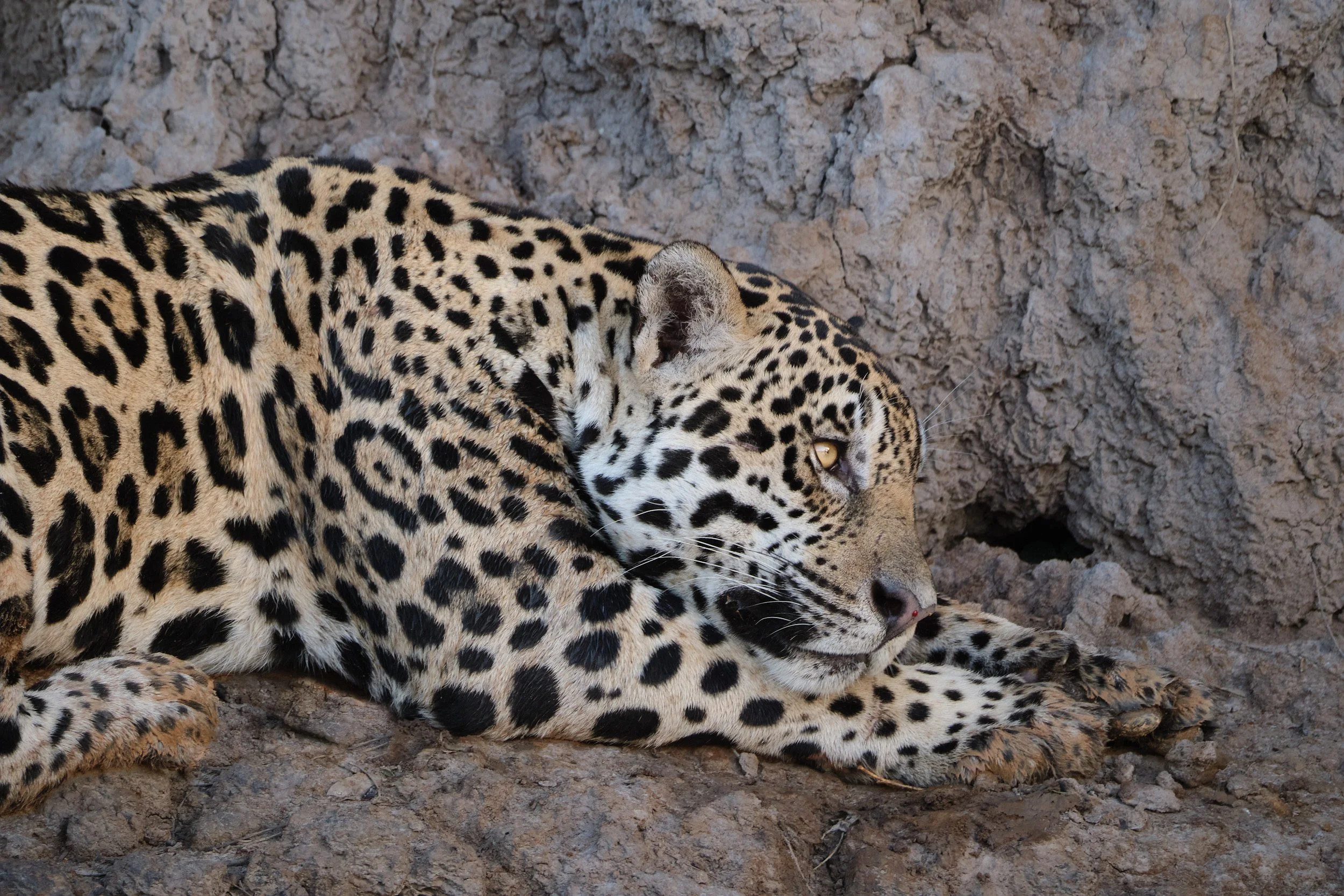
Mid-day rest
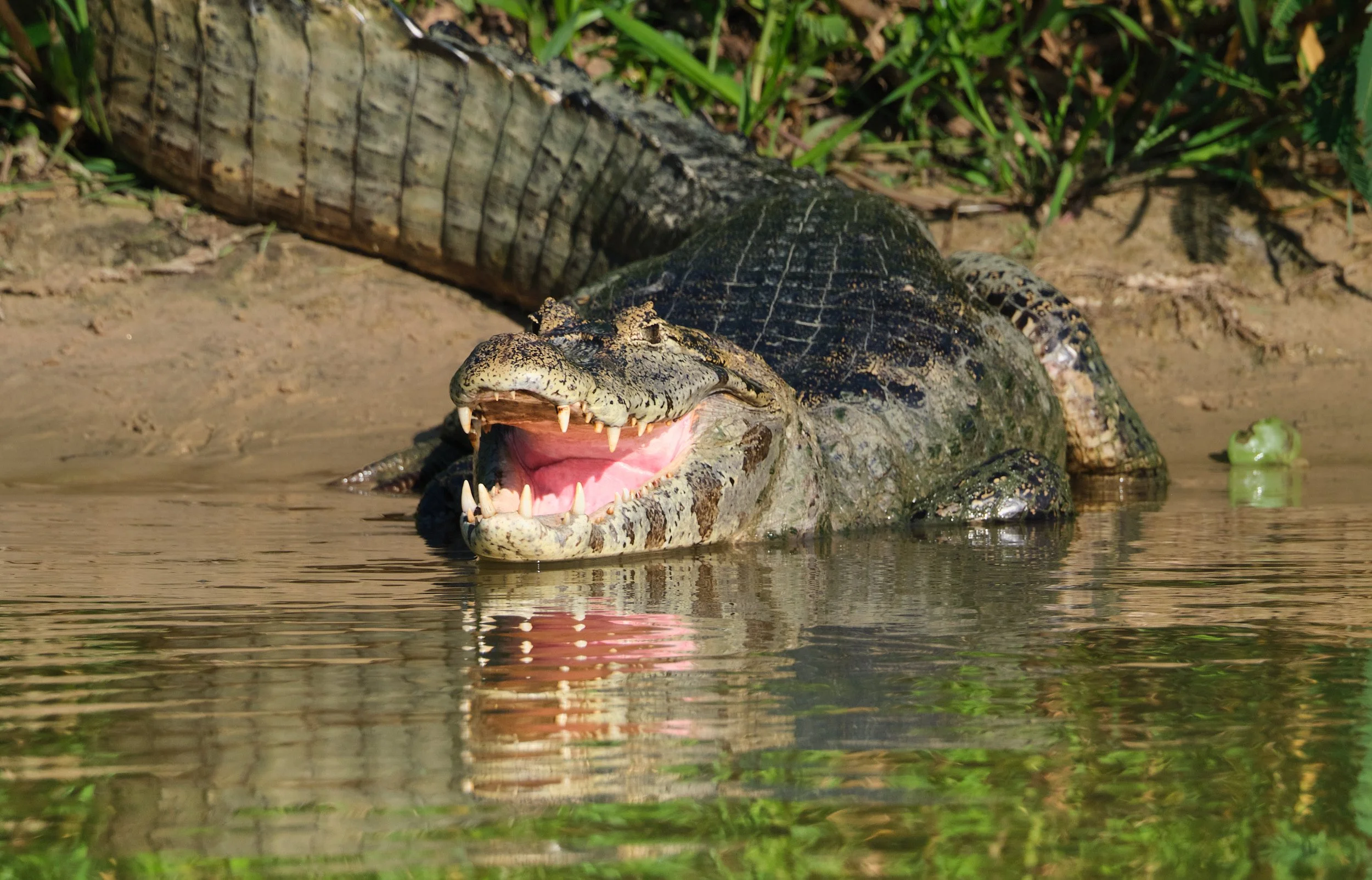
A cayman, the jaguars’ favourite prey.
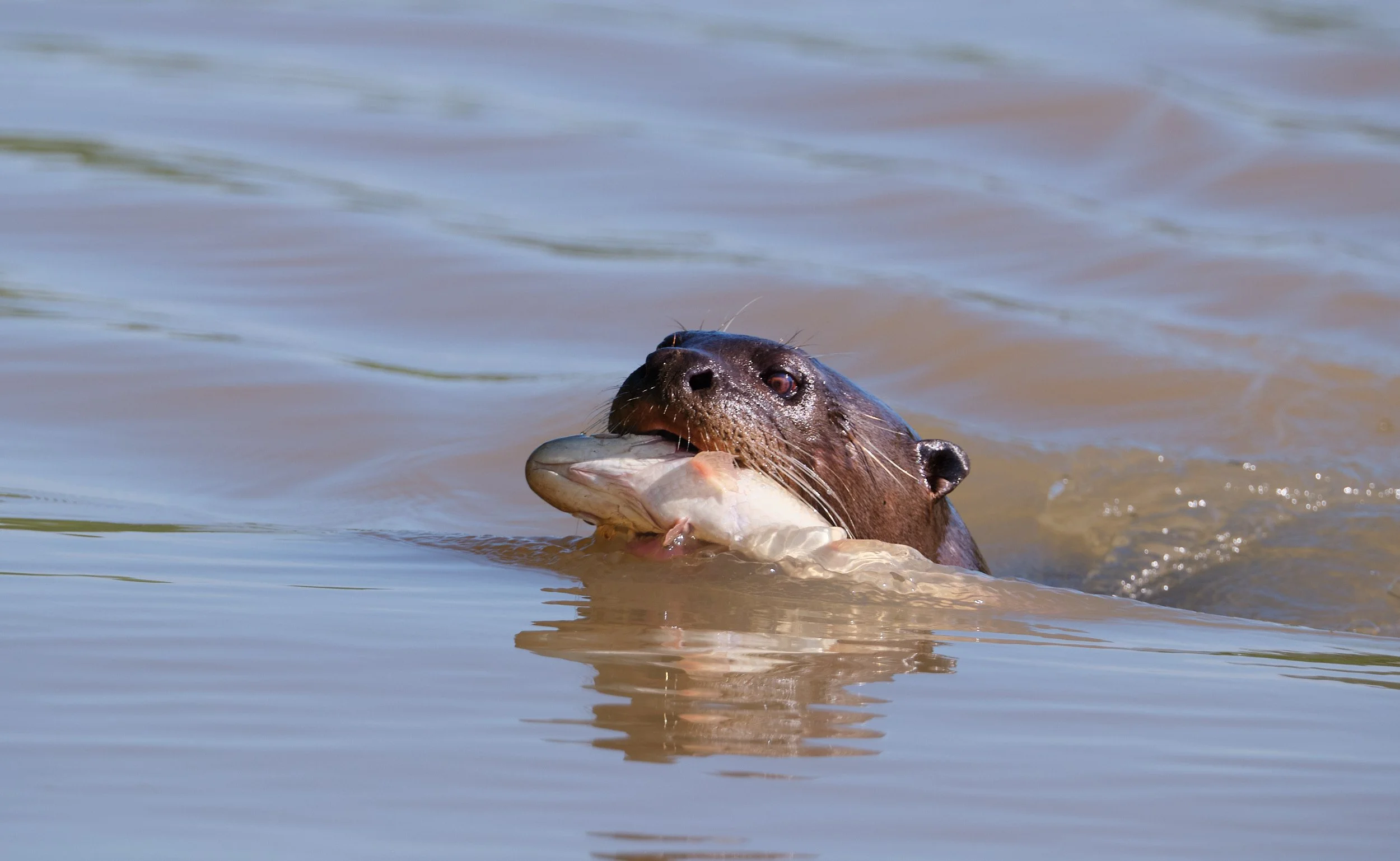
A change of pace from jaguars. Giant otter with a just-caught fish. They swim so easily but at such speed that they create a bow wave. The water behind him is several inches lower than the wave that he is creating in front.
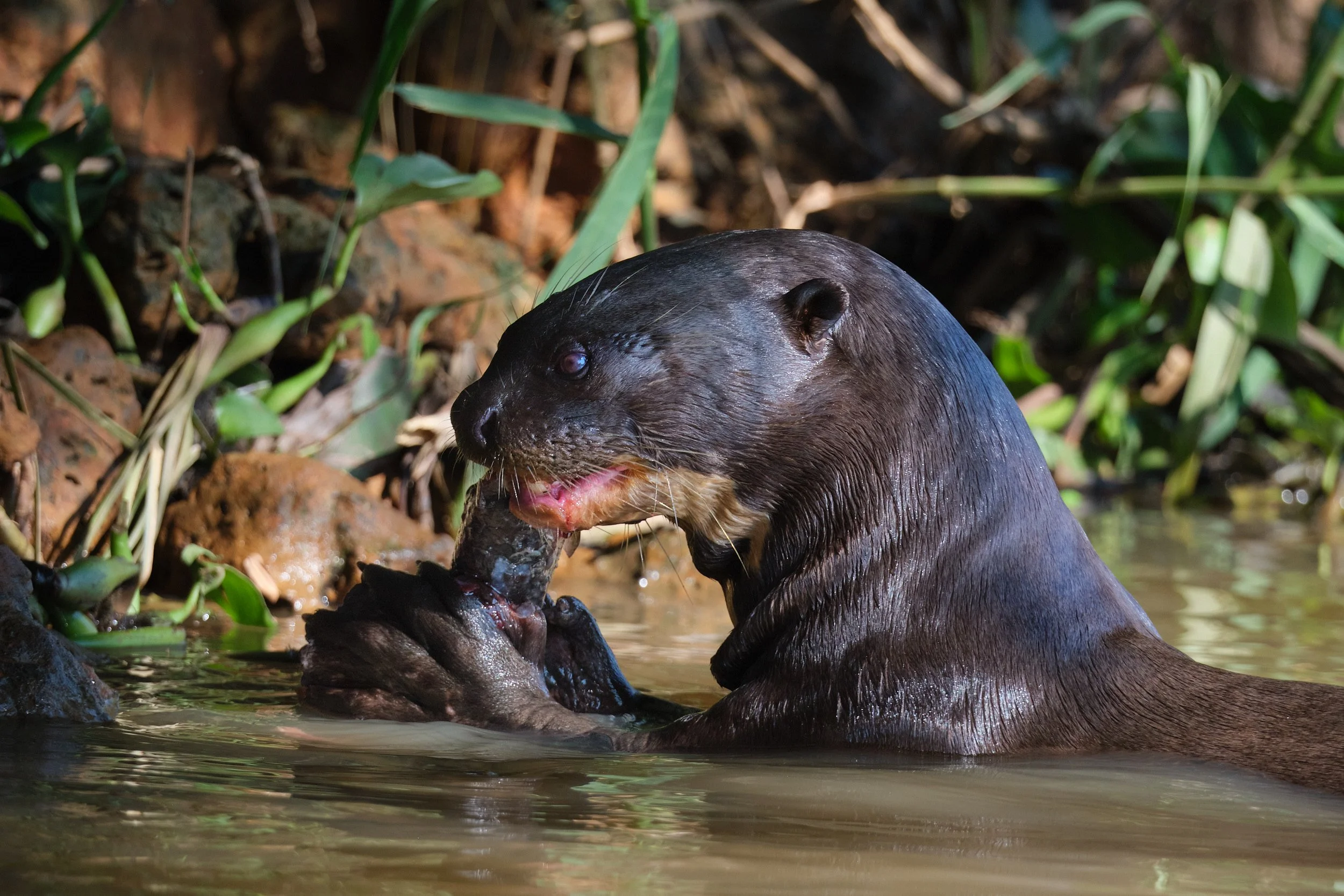
Otter and his meal
More to come!